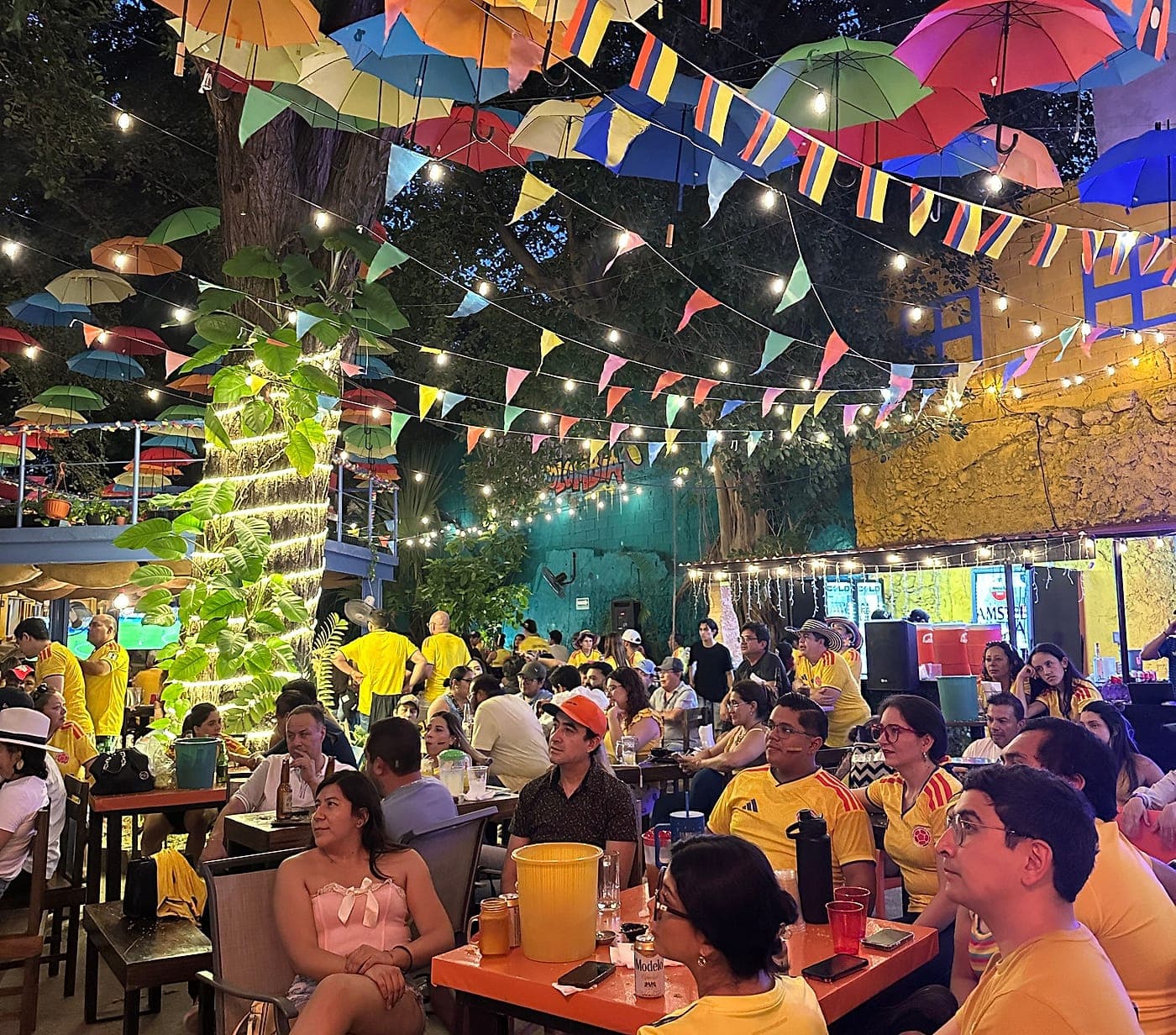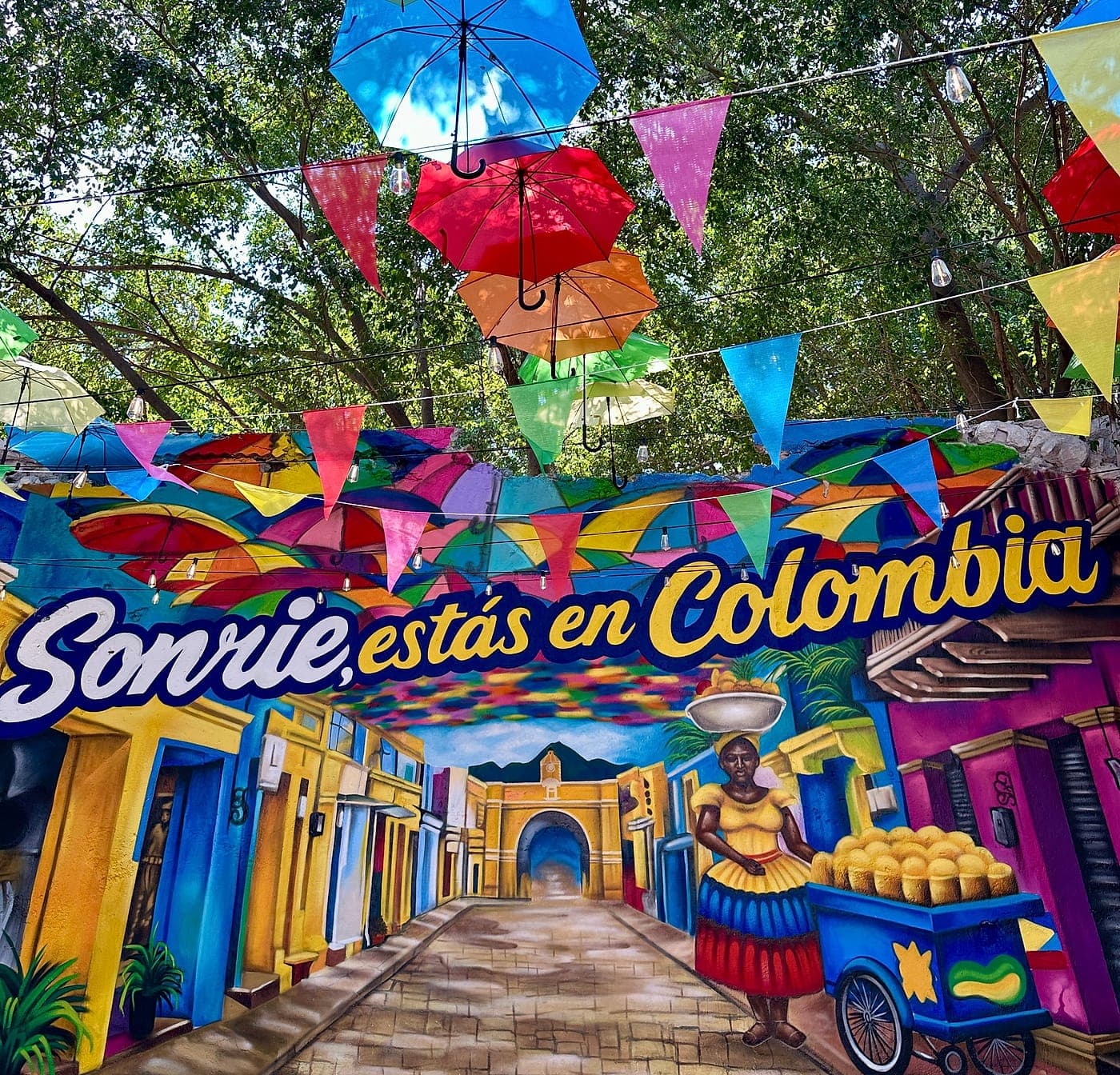
We are a Colombian house in the middle of downtown Mérida, which makes September a strange and lovely month for us: the whole city turns green, white and red for a holiday that isn't ours, and it still lands close to home. When people ask whether we celebrate the 15th, the short answer is yes. The long answer is more interesting.
Both countries call their national day «el Grito» — the cry — and both dates fall in the same year: 1810. That is not a coincidence. It also doesn't mean the same thing happened in both places.
Why both dates come from 1810
In 1808 Napoleon forced Charles IV and Ferdinand VII to abdicate at Bayonne and put his own brother on the Spanish throne. Overnight, an entire empire was left without a legitimate king — and cities across the Americas had to decide who was in charge in the meantime. Almost everywhere, the answer was to form a governing junta of their own. That was 1810 in Spanish America: Caracas in April, Buenos Aires in May, Bogotá in July, Santiago in September.
July 20th: a vase nobody lent
Bogotá's began with an argument over a flower vase. On 20 July 1810 a group of criollos walked into the shop of a Spanish merchant, José González Llorente, and asked to borrow it for a banquet — stated intention. The real intention was for him to refuse, so there would be a scene. He refused. There was a scene.
A junta was installed in Santafé de Bogotá that same day, and here is the part almost nobody tells: it formally declared loyalty to Ferdinand VII, the deposed king. It wasn't a clean break — it was «we'll govern ourselves until the king comes back», and the king never did. Full independence came nine years later, at Boyacá.
September 16th: a church bell before dawn
Dolores was a different kind of event, which is exactly why the two are worth keeping apart. Before dawn on 16 September 1810, the priest Miguel Hidalgo y Costilla rang his parish bell and called people to take up arms. No junta, no permission asked, no oath to any king: it was the direct start of a war.
That is why «dar el Grito» in Mexico happens at night, out loud, from a balcony, with a bell involved. And it is why the date the country celebrates is the one that started the war rather than the one that ended it, eleven years later.
So: same year, same underlying crisis, two very different ways of starting. A junta swearing loyalty, and a priest handing out weapons. For those of us who have been on this side of the map for a while now, that difference is the best dinner-table conversation September has to offer.
The night of the 15th — and what happens on the 16th
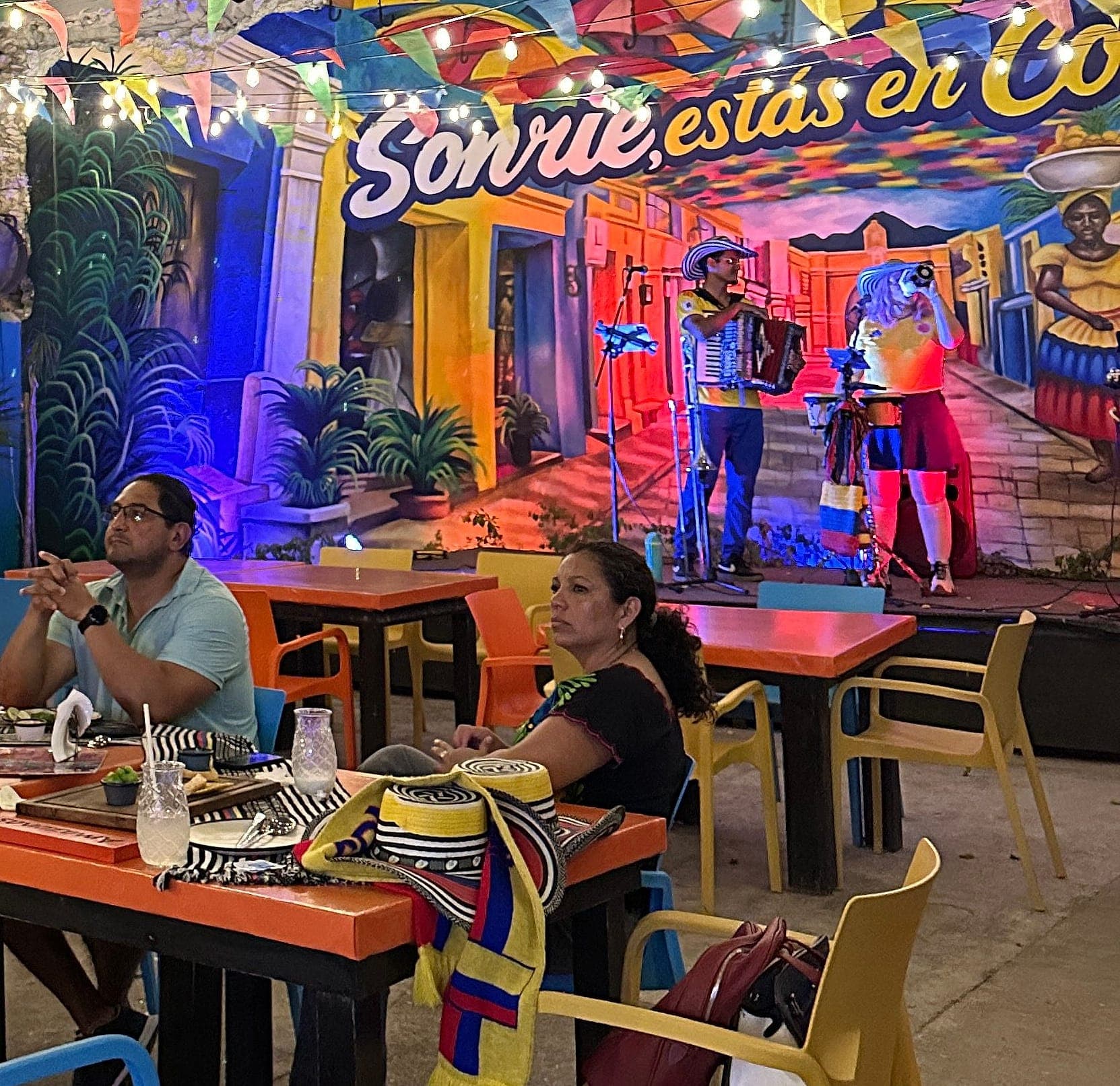
The party is the night of the 15th, the night of the Grito, and it runs until midnight — later than we close on any other day. There's live music, and there are special dishes you won't find on the everyday menu.
And the music is the part that tells you what this really is: it's Colombian-Mexican, a mix of everything. We didn't fly in a band from over there to play their songs at people from over here, or the other way round. It gets mixed — which is what we've been doing since the day we opened, and what actually happens when two countries share a year, a word and a night.
We're not trying to compete with the Mexican celebration: the Plaza Grande fills up, and that is where you want to be when the Grito happens. What we offer is the before and the after, which is the part we know how to do — Colombian food, music, and a terrace where the night stretches out on its own.
We're open on the 16th too — it's a public holiday and a good day to eat without rushing. That one is a normal day for us: no party, regular menu, which for the day after the Grito tends to be exactly what you want.
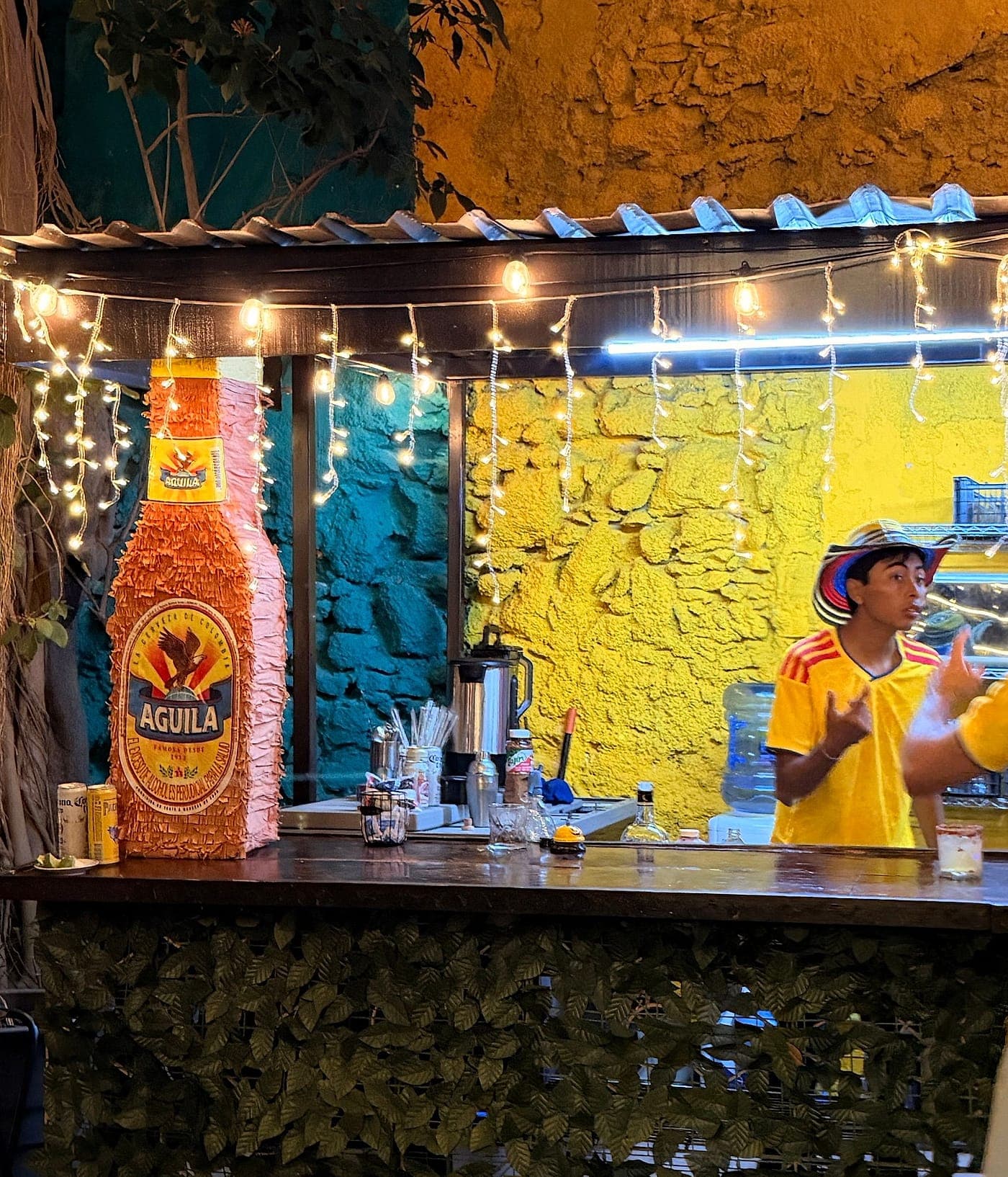
Coming for the Grito? Two practical notes
First: we're on Calle 62, and the Plaza Grande is straight down that same street — you can do the whole evening on foot without moving the car once. Second, and this is the one that matters: on a night like this downtown usually has streets closed to traffic, so plan on parking early and walking. Which ones close is published by the city along with the programme — there's a link below to check.
The 15th falls on a Tuesday and the 16th on a Wednesday, so we don't have valet those two nights — we run it Friday through Sunday. These are the parking lots nearby:
Our own parking: 2 spacesPlus valet parking Friday through Sunday: pull up to the door and we park it for you.
If they are taken, these are the closest lots:
Where to park downtown, in more detail
And an honest warning about Grito timings: as we write this, in late August, the city government had not yet published this year's official programme. If you search for the time online, be careful — what surfaces most easily is last year's schedule. Worth checking at the source:
Cultural programme, City of Mérida
Book a table — the 15th fills up
It's the busiest night downtown all year, and we're not a big place. If there are several of you, give us a heads-up and we'll set the table up for you. It takes half a minute and costs nothing.