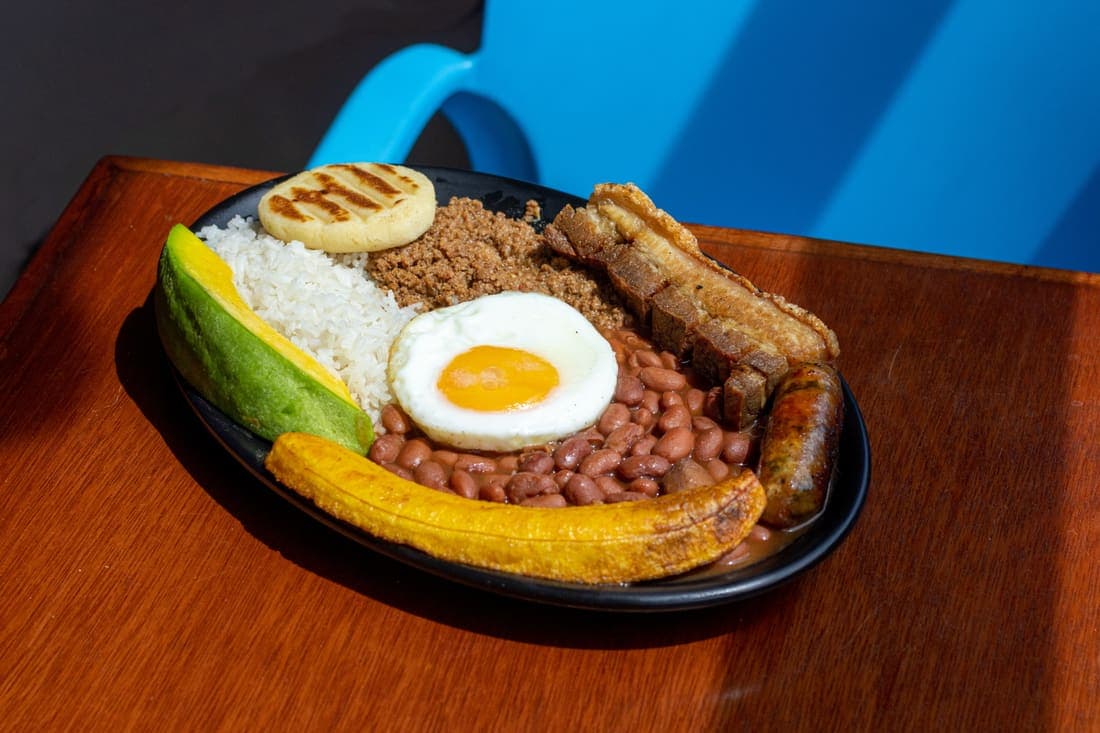
A bandeja paisa is Colombia's best-known dish: beans, white rice, beef, chicharrón, a fried egg, sweet plantain, an arepa and avocado, all served at once on a platter rather than on separate plates. That is what it is. What is interesting is why it is built that way.
It comes from a muleteer's lunch
It was not invented as a restaurant dish. It grows out of the envuelto antioqueño — what a muleteer from Antioquia and the old Viejo Caldas carried on the road from the mid-1800s onward: things that keep, and that together will get you through a full day walking the mountains. That is where the abundance comes from. It is not excess, it is working food.
The name, on the other hand, is recent — and not Antioquian. It was coined in Bogotá in 1950, at a Cotelco meeting: they were assembling a manual of the country's typical dishes, found that Antioquia had no declared dish of its own — locals simply called it «seco» — and decided to call it bandeja paisa. The dish is from Antioquia; the name was given to it from the capital.
What each thing on the platter is doing
This is the part people misread. These are not eight side dishes arranged around a piece of meat. Every element has a job.
- The beans are the base — cooked with plantain, they are what holds the plate together.
- The white rice is there to carry the beans, not to fill you up.
- The beef and the chorizo bring the strong savoury flavour.
- The chicharrón brings texture: it is the part that cracks.
- The fried egg gets broken over the top and binds what was loose.
- The sweet plantain is the sweetness that cuts the fat. Without it the plate turns heavy.
- The avocado is the fresh note, and it goes last.
- The arepa is the utensil: you use it to scoop up whatever is left.
Eating it in sections, finishing one thing before starting the next, is how to make it not work. You eat it mixed: a little bean, a little rice, some beef, and the plantain whenever the bite asks for sweetness.
The one-person version and the sharing one
There are two on the menu. The personal Bandeja Paisa is the classic, for one. The Bandeja Paisa 3 Pisos is the same idea stacked on three levels, made to go in the middle of the table and be passed around — and it is usually the one that ends up in the photos.
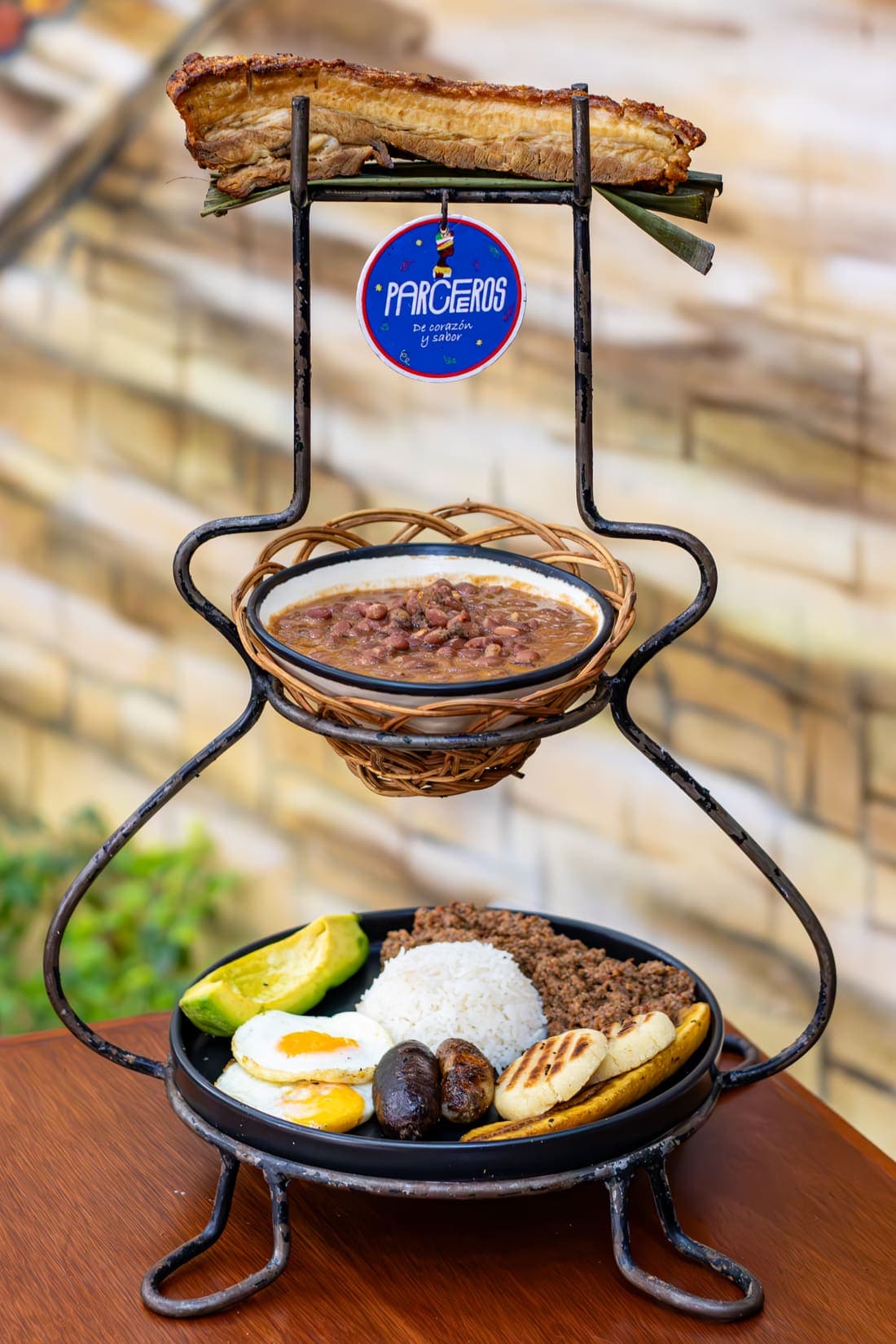
The personal one is $250 and the 3 Pisos, being a sharing dish, is listed separately on the menu.
Where to eat one in Mérida
At Parceros, Calle 62 #443 downtown, a few steps from Parque de Santa Lucía. It is the city's only full Colombian kitchen, and the bandeja is the dish that leaves the kitchen most often.