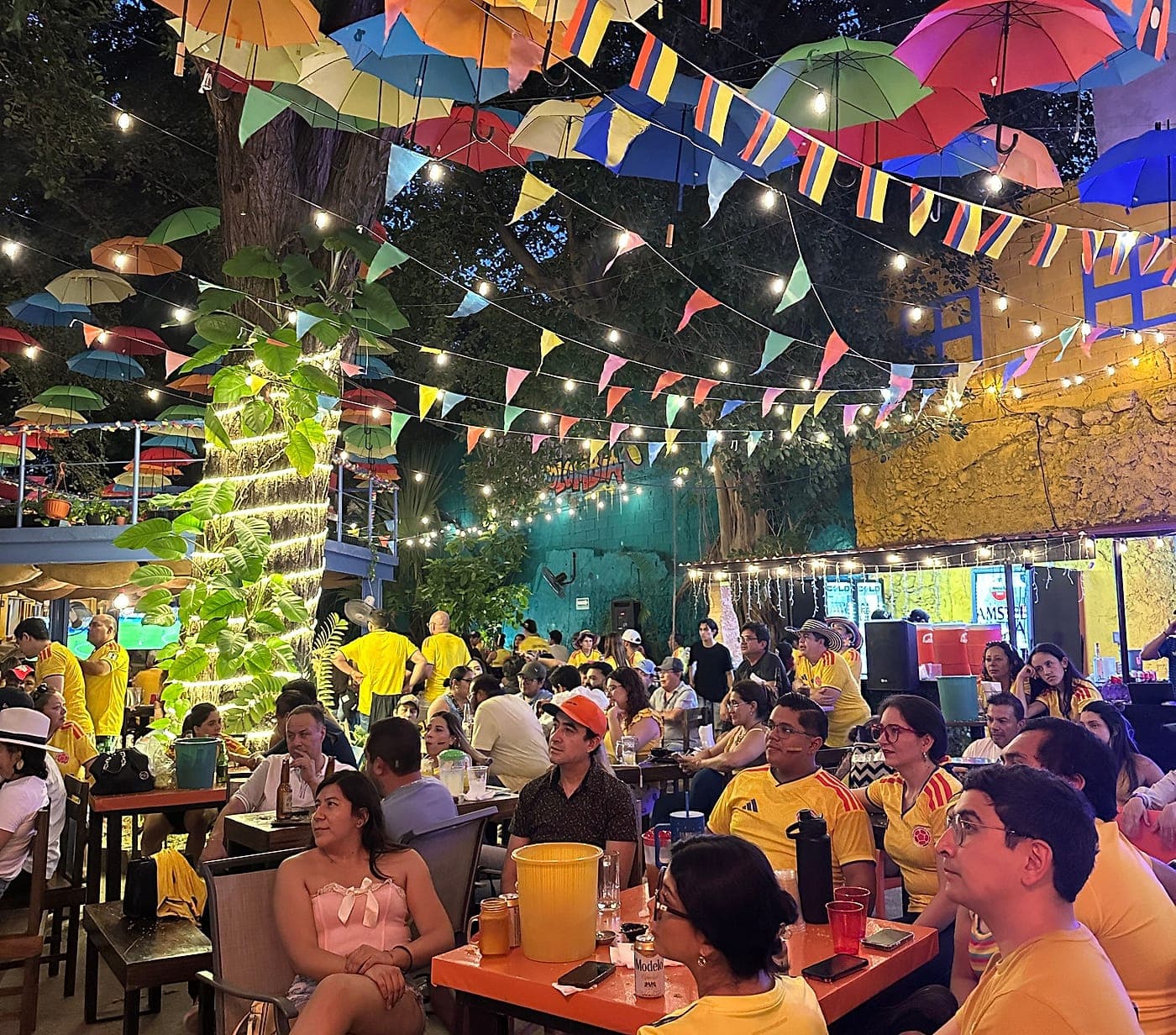
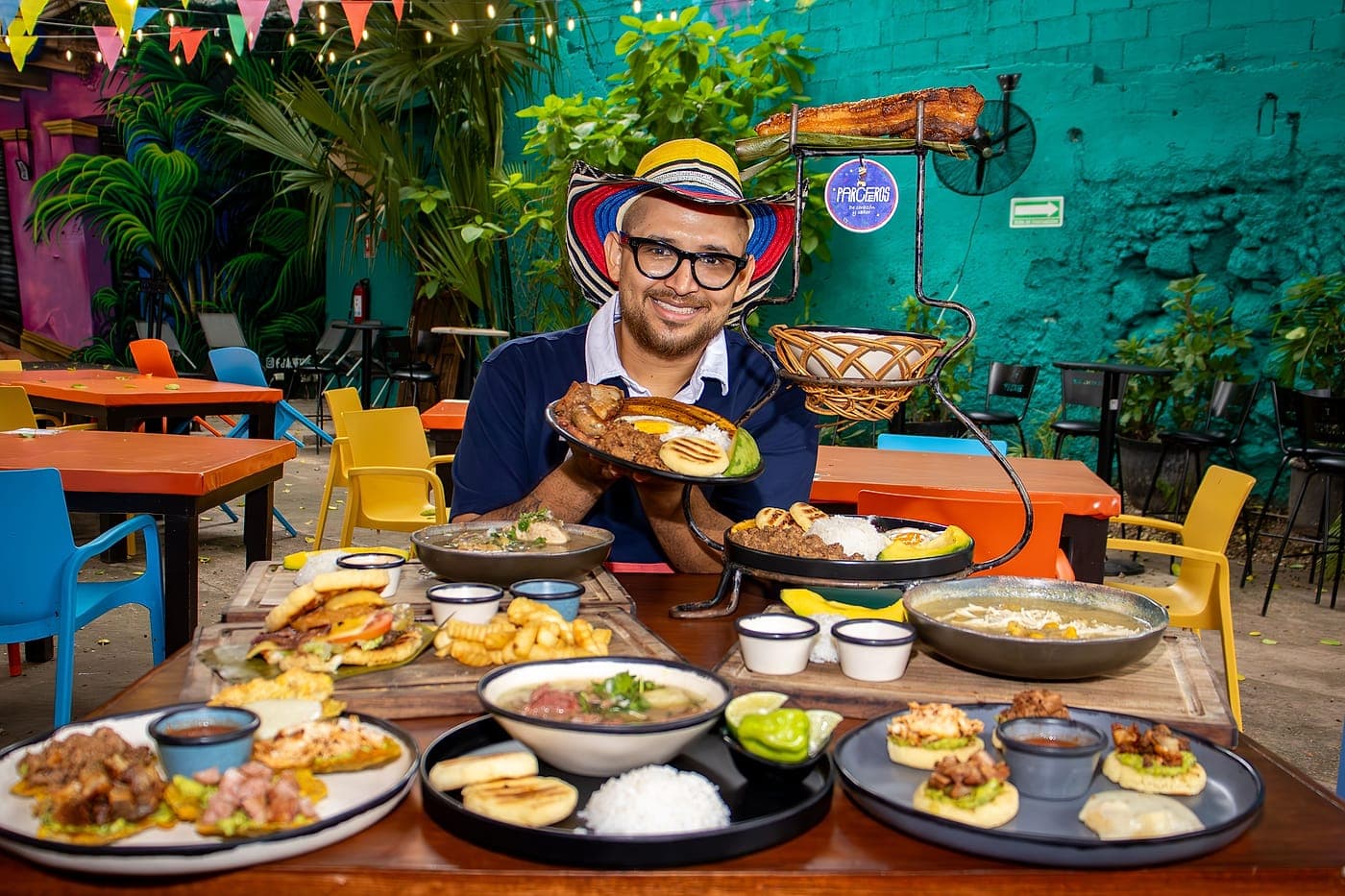
The short answer: at Parceros, Calle 62 #443 in the historic center, a few steps from Parque de Santa Lucía. Our home is called La Bodeguita de Parceros, and it is the city's only full Colombian kitchen — not a Colombian section inside somebody else's menu, but the dishes of Colombia's regions cooked the way they are cooked there.
The long answer is more useful, because «Colombian food» is not a dish. It is an entire country, and everything changes from one region to the next.
The three dishes to start with
If you have never eaten Colombian food, three dishes tell the whole story. All three are in the «Típicos de Colombia» section of the menu.
- Bandeja Paisa — from Antioquia, the mountains. The one everybody knows and the one we serve most: beans, rice, beef, chicharrón, fried egg, plantain, arepa and avocado, all on the same platter.
- Ajiaco santafereño — from Bogotá, the highlands. A soup of three kinds of potato with chicken, corn and guascas, finished at the table with cream and avocado. It is the opposite of the bandeja: it fills you with depth rather than quantity.
- Sancocho de Gallina — the Sunday dish, the river dish, the one that in Colombia is made in a big pot because nobody ever cooks it for one.
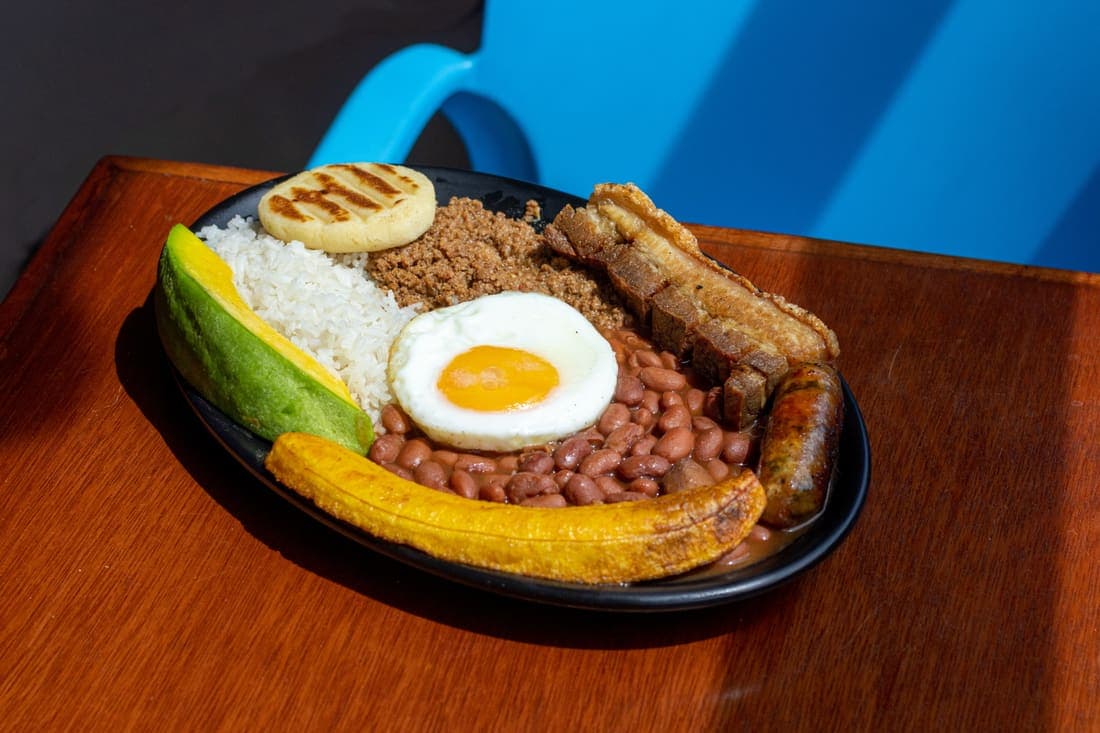
The personal Bandeja Paisa is $250 and the three dishes in that section are all around the same price.
And if you come as a group
The logic changes: in Colombia, what is shared goes in the middle and everyone serves themselves. That is what the Bandeja Paisa 3 Pisos, the Picada Montañera and the Castacón are for — and the Castacón is the dish that explains this place best: pork cooked the Colombian way, eaten in a taco with a handmade tortilla, the Yucatecan way.
What a Castacón is, and how it got its name
Things to pick at, and Colombian street food
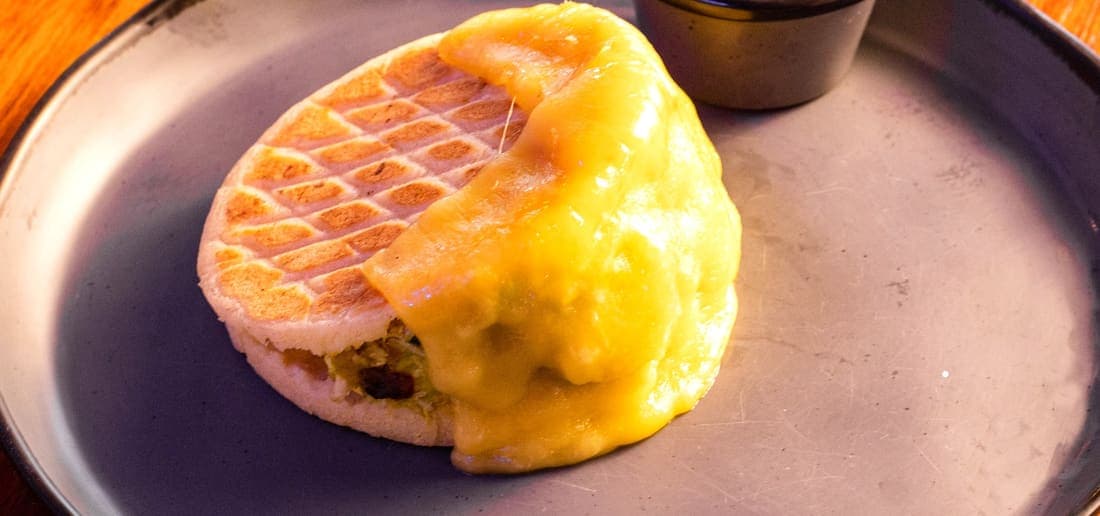
Colombian street food is half the story, and it almost never makes it onto a menu outside Colombia. Here it does: arepas — the Paisa comes with chicharrón, chorizo and avocado — plus patacones, empanadas, arepitas, and chicharrón to pick at with guacamole.
And the coffee. It is single-origin Colombian, and a tinto is ordered the way it is ordered back home: small, black, and at any hour of the day.
Why here, and not somewhere else
Because we are Colombians who live here. Mao and Lu opened the first Parceros in Mérida, lost it, and opened again downtown on 1 May 2026. What you eat at La Bodeguita is not a version adjusted to local taste: it is what we would cook at home, with the advantage that Yucatán has the best pork in the world to cook it with.
And there is a practical reason, if you have been in Mérida for three days: however good the cochinita is, at some point you want something else. That something else is a few steps from Santa Lucía.